

Rewind to 1998.
It’s a Sunday. You fix your red-and-black checkered pajama pants, dust off your desk, and start charging up the computer. It’s clunky and makes a lot of noise when it turns on—also, it’s very, very slow.
You sit there patiently, looking at the ceiling, slightly spinning in your chair. The blue Microsoft classic desktop screen illuminates the room's walls. “Finally, it’s on,” you say under your breath. Your internet surfing begins—I mean, you were only on it to finish researching for your college paper due by the end of the week.
You research a bit, collect what you need, and you’re off—off to enjoy your Sunday in the real world.
Fast forward to 2026.
It’s the same you. You fix the spaghetti-sauce-stained pajama T-shirt that you’ve been wearing since Friday, and you dust off your desk, full of old and new coffee cups, a bag of chips, and scattered cords. You tend to sit at this desk a lot; in fact, your entire existence- approximately 7 to 9 hours of your day is spent there.
Your super-fast, miraculously thin computer charges in a second. And you’re already in, surfing the internet with multiple tabs open; next to you is your mini computer—your phone—with lots of short-form videos open. Your attention and mind are all over the place: one eye on the screen, one on the phone.
And before you know it, another day has been eaten away by hypnotic screens.

Let’s be honest with ourselves
I’m not trying to shame anyone with this question, but do you want to be 1998 you or 2026 you?
I think many of us are unfortunately 2026. Even if we’re not sitting at a desk with a computer, we carry a computer in our hands, and every second of our day is wasted looking at the internet of things without a clear aim or goal.
You see, the point of the internet back then was to research, do homework, find information, or share information, and then shut it off.
This is one of the key reasons why people aren't reading more today or using their time more wisely. We have distorted the internet and how we use it—or, we’ve long forgotten how it was meant to be used.
And it doesn’t help that mindless entertainment flooded the internet just as society started getting overwhelmed by inflation and debt. So I understand the desire to shut out the real world for a while to cope with all the stress it brings these days by zoning out into a screen.
But the internet was once a destination—a place—you had to physically get ready for. I still remember when my dad bought his first PC. He came into the house all dressed up, suit and tie, after a long day working at State Farms Insurance.
He had been saving up for his clunk of a computer for months, because we lived paycheck to paycheck, even back then in the last amazing era of the 90s, when everything was normal, and life had color.
I would hear his loud clacking at the computer, but it only lasted for so long, because he would shut it off after 30 minutes, bored, and shift his attention and time to the real world.
It’s as if we’re not on Earth anymore
Basically, I don’t have to write a long-winded, research-backed article proving how we all, as a collective society, are eating away our time by looking at screens.
I think we all know this by now. It’s OBVIOUS. And it’s EVERYWHERE.
Jonathan Haidt described it best in his book “The Anxious Generation,” as if today’s world is like we got displaced onto Mars and everywhere you look, people are looking at a tiny hand-held box. People aren’t people anymore. They’re not here. They’re on Mars.
After reading his book, I started paying more attention to those around me and viewing them through Jonathan Haidt's lens. It was perplexing. I don’t think we realize how weird this all is. Walking through the airport when I came back from my trip to Malaysia, I saw entire families sitting next to each other—mom, a dad, and two kids—and every single one of them was glaring into their phone. I looked over at the janitor, holding a mop and their bucket in one hand; they were also scrolling on their phone.
Have I teleported to Mars? I asked myself.
How to use your internet like it’s the 90s
The good news is, more and more people are becoming aware of this problem. Hence why you see tons of similar writings like mine on Substack and in major news platforms, discussing going analog and getting off the phone.
For example, the NY Times article “I Was Addicted to My Smartphone, So I Switched to a Flip Phone for a Month” by Brian X. Chen, or the article, "The Elite College Students Who Can’t Read Books" by Rose Horowitch in The Atlantic.
We get it. All any of us has to do is look at our screentime on our phone, and see a godly amount of hours we wasted.
But what can we do?
Well, there’s actually a lot we can do, but it has to come from the individual level. You and I. We have to make the individual choice everyday about how we spend our time. And this takes a level of awareness that people have become numb to.
So to assist you and I both on this, I made this super-simple bullet point rule book, I’m trying to live by day to day now, and it’s how to use the internet like the 90s:"
Don’t reach for your phone. Only use the phone when you need to call or message someone. (easier said than done. I know. But it takes time.)
Have an aim, a goal in mind? Sit at your laptop. If you don’t, no need to be on the computer.
Lastly, this a whole different topic on its own that I can also rant hours about, when it comes to research, I no longer feel like the internet is entirely safe for that anymore. Physical books are where we need to gather and learn our information.
Oh, and read more.
I’m currently reading two books simultaneiously, it both keeps me preoccupied and tempted from wasting hours on the computer and the phone. I noticed I feel more grounded in myself as well.
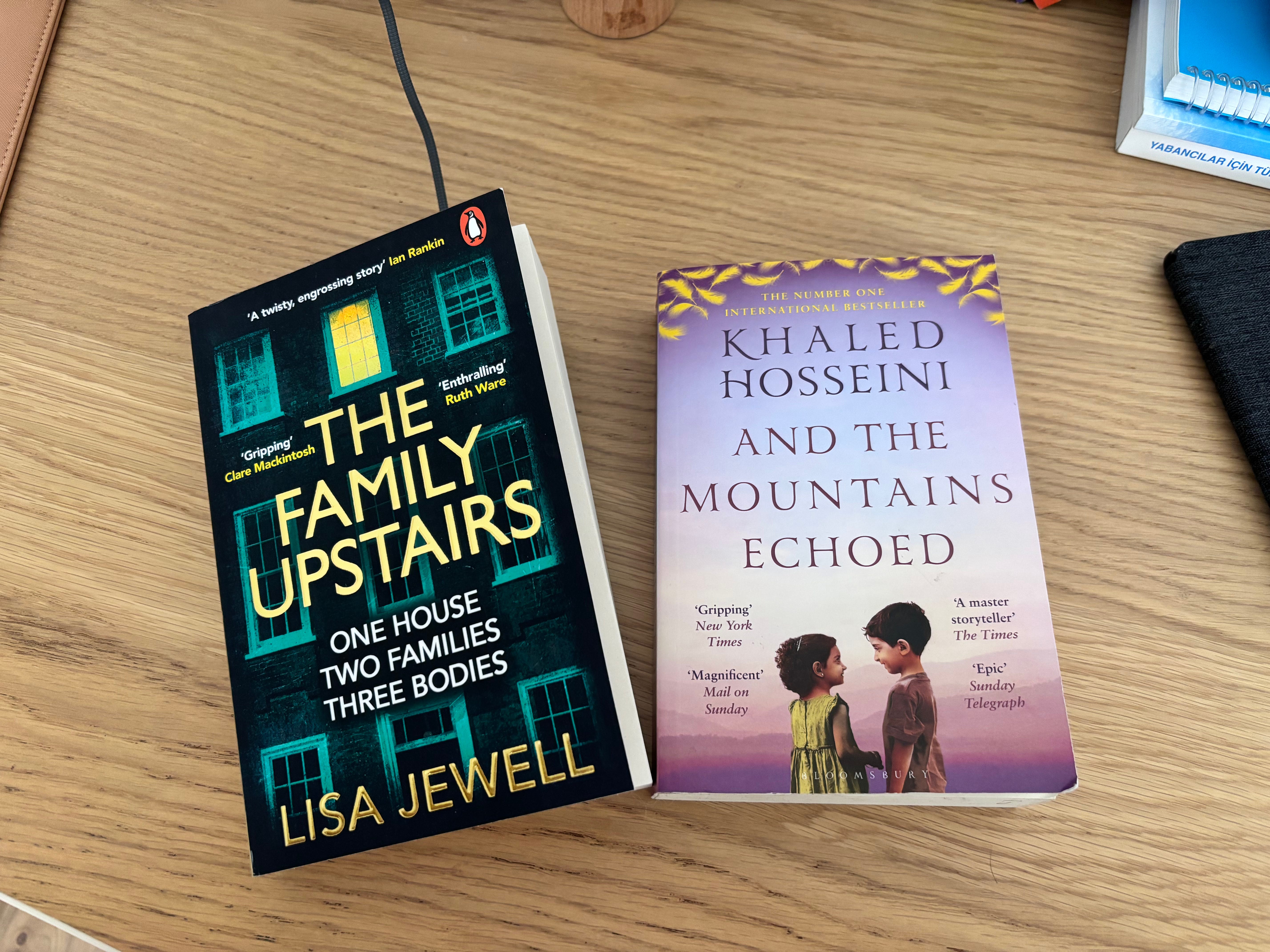
The Family Upstairs by Lisa Jewell - So far, I’m on page 43 and can’t put the book down. Great read so far. It’s one of those books that you can’t stop reading.
And The Mountains Echoed by Khaled Hosseini - I’m currently reading this one, a touching story to start out. It has me also instantly hooked. It cuts into the stark reality of a lot of children today. You feel their abandonment, their sadness, and the emotional whirlwind of their lives. I don’t want to spoil the story for you before you read it, so I’m holding back on giving every detail.
In the chat I’m plugging below, I’ll share updates on what I’m reading, how many pages, etc. And you can join along too, share with us what you’re reading and what page you are on.
For now, I hope you enjoyed my writing—I sort of like this spontaneous, laid-back style of writing I have going. At the end of the day, It’s Substack. I mean, we’re not writing novels on here.

Push To Read Book Club
I’m running a low-pressure reading space for all of my subscribers. Here are the conditions:
Read whatever you want.
Every Friday, you drop the page number that you’ve read up to. You can also share a favorite quote or snippet from the book you’re currently reading.
There’s zero pressure. You can read 3 or even 50 pages. Whatever works for you.
The point is to keep us all motivated and consistently reading:
